Tech Case for Travel: Who It Suits and Who Should Skip It
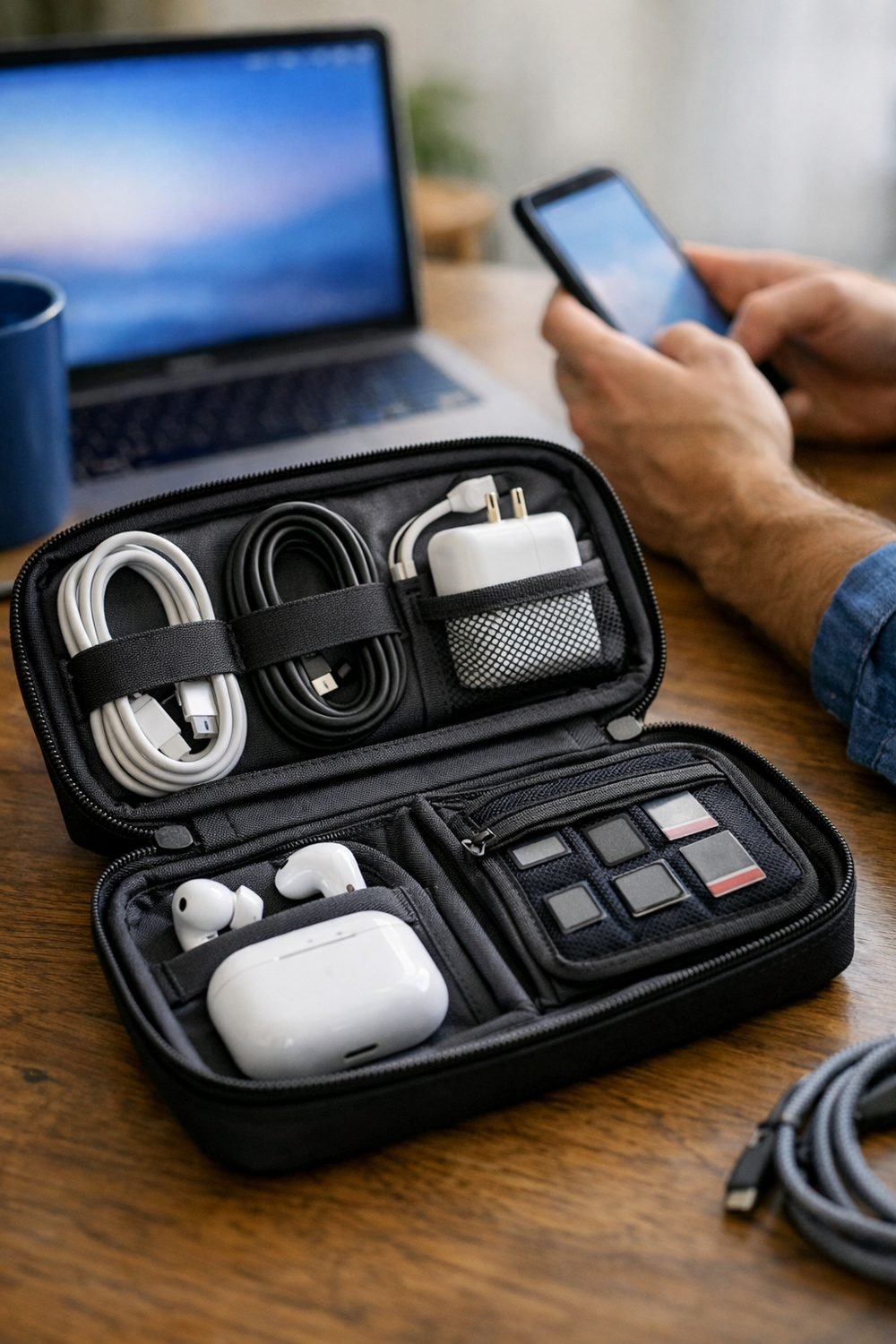
Many people throw every cable they own into a backpack side pocket and hope for the best. Then one morning at a hotel, you can easily end up spending ten minutes untangling a charger from your earbuds while your ride waits outside. A tangled cable mess at airport security is often the moment people decide to buy a tech case for travel.
Here's the thing, though. A tech case isn't for everyone. Some people swear by them, whether it's a Bellroy Tech Kit or something simpler, and some people buy one, use it twice, and leave it in a drawer. So let's talk about who actually gets something out of one, and who would be fine without it.
Short on time? Our top picks: Bellroy Tech Kit, Peak Design Tech Pouch, Topo Designs Dopp Kit and Cocoon Grid-It Organizer. See all picks
What a Tech Travel Case Actually Is
If you haven't used one, a tech case is a small zip-up organizer for your electronics, and the best travel tech organizer is simply the one that fits your gear. Most have elastic loops for cables, little mesh pockets for things like adapters and memory cards, and sometimes a padded spot for a power bank or a small hard drive.
They come in a lot of shapes. Some are flat and open like a book. Others are more like a boxy pouch with a hard shell, such as the Amazon Basics Universal Travel Case. Sizes vary a lot too, so check the measurements on the seller's page before you buy. A case that looks roomy in photos can turn out tiny in real life.
It's not magic. It just gives your stuff a home. Whether that's worth it depends on how much stuff you carry and how you like to travel.
Good Fit: You Carry a Pile of Cables
Count your cords for a second. Phone cable. Watch charger. Earbuds case cable. Laptop charger. Maybe a camera battery charger. A travel adapter. It adds up fast.
If you carry four or more cables, this is where a tech case earns its spot. Each cord gets its own loop, as with a Cocoon Grid-It Organizer, so nothing wraps around anything else. You open the case, you see what you need, you grab it. No fishing around at the bottom of a bag.
It also helps that you can see when something's missing. Before I leave a hotel, I glance at the case. If a loop is empty, I know I left a cable plugged in by the bed. That little habit has saved me from losing more chargers than I'd like to admit.
Good Fit: Remote Workers and Laptop People
If you work from cafés, airports, or rented apartments, your gear is your office. You probably carry a laptop charger, a mouse, maybe a portable drive, a USB hub, and a power bank. Losing one of those can wreck a workday.
A tech case keeps all of that together so you can move from your bag to a table in about thirty seconds. When you pack up, everything goes back in one place. This matters more than people expect. When you're packing up in a hurry because the café is closing, it's easy to leave a small drive behind.
An honest tip: if you work on the road, get a case with at least one padded section. Drives and small gadgets don't love getting knocked around.
Good Fit: Frequent Flyers Who Want a Simple Travel Case
Airport security rules change from place to place, and sometimes you're asked to take electronics out of your bag. When that happens, a tech case is so much nicer than pulling out loose items one by one while the line behind you sighs.
You can just lift out one case, put it in the bin, and you're done. On the other side, it goes right back into your bag. Rules on what has to come out differ between airports and countries, so check with your airport or airline if you're unsure.
It also helps on the plane. Keep your case in your personal item, so when you want your earbuds or a charging cable mid-flight, you're not digging through the overhead bin. If you're still sorting out your bag setup, the Carry-On Luggage Buyer's Guide and Comparison Sheets below this post can help you think about where a tech case would actually fit in your carry-on.
By the way, if you've got a trip coming up, the free Vacation Countdown Checklist and 1-Day Itinerary Page is yours when you join the email list.
Skip It If: You Only Bring a Phone
Now for the other side. If your whole tech kit is a phone and a single charging cable, a tech case is overkill. Really. One cable fits in a jacket pocket or the small front pocket of any backpack.
It's easy to buy a fancy case for a weekend trip and then carry around a mostly empty pouch. It looked nice, but it was dead weight. If that sounds like you, a zip-top bag or a small coin pouch will do the job for basically nothing.
You might change your mind later if you start carrying more gear. That's fine. There's no rush to buy one before you need it.
Skip It If: You Pack Very Light and Want No Extra Case
Some travelers count every ounce. If you're doing a backpack-only trip, hiking between towns, or trying to fit everything under the seat on a budget airline, a tech case can feel like a luxury.
Even a small one adds some weight and takes up a corner of your bag. A hard travel case is the worst for this, since it doesn't squish down. If you're a light packer and still want some order, look for a thin fabric pouch with no padding. It's lighter and folds into odd spaces.
Honestly, a lot of ultralight packers I know just roll each cable and wrap it with a hair tie. It's not pretty. It works.
Skip It If: You Don't Like Organizing
This one is about personality. A tech case only works if you put things back in their spots. If you're the type to toss stuff in and zip it shut, all those neat loops and pockets won't help much. You'll end up with a nicer-looking mess.
That's not a criticism. Some people just don't enjoy that kind of order, and that's okay. A basic travel case with one big space suits them better. For you, a simple open pouch is probably better. One zipper, one space, toss it all in. At least your cables stay out of the rest of your bag.
Also, don't buy a tech case hoping it'll turn you into an organized person. That approach rarely works out.
What I'd Look For in a Tech Case for Travel
If you've decided a tech case makes sense, here's what I pay attention to:
- Size first. Lay out your actual gear and measure it. Then compare it to the case dimensions.
- Elastic loops that are actually snug. Loose loops let cables slide out.
- A zipper that opens wide. Narrow openings get annoying fast.
- Some water resistance, if you travel somewhere rainy. Check the product details for what that really means.
What I'd skip: cases with a dozen tiny pockets you'll never use. More pockets sound useful, but they often just make it harder to find things.
Tech Cases Worth a Look
Here are a few well-known options to browse if you've decided a tech case suits the way you travel. Think of them as starting points, not rankings.
Bellroy Tech Kit
Suits travelers who like a clean, soft-sided organizer with a tidy look. Check the interior layout against the gear you actually carry before buying.
Peak Design Tech Pouch
A fit for people who carry cameras, cables and small accessories together. Check the size options, since the pouch needs to match your bag and your gear.
Topo Designs Dopp Kit
Works for those who want a simple open pouch rather than lots of loops and slots. Remember it is a general-purpose bag, so it will not keep cables separated on its own.
Cocoon Grid-It Organizer
Suits people who want elastic bands to hold each cable and gadget in place. Check the dimensions, and whether you want a separate pouch to carry it in.
Incase Accessory Organizer
Good for people who want a padded, structured case for drives and chargers. Look at how much room there is for your biggest item, such as a laptop charger.
Anker Travel Pouch
Suits those who already use Anker chargers and power banks and want a pouch to hold them. Check that the pouch is large enough for your power bank and cables together.
Amazon Basics Universal Travel Case
A budget-minded pick for occasional travelers who want a basic hard-shell case. Check the padding and zipper details, and consider that a hard case does not squish down in a packed bag.
Check current plans and prices on each brand's own site before you decide.
FAQ
Can a tech case go in checked luggage?
It can, but think about what's inside. Many airlines have rules about power banks and spare lithium batteries, often requiring them in carry-on bags. Check your airline's page before you pack.
Is a tech case the same as a toiletry bag or makeup travel case?
Not really. A makeup travel case can look similar, but tech cases usually have elastic loops and padding made for gadgets. A toiletry bag might work in a pinch, though it won't keep cables separated.
Do I need a big one or a small one?
Go by what you carry now, plus a little extra room. A case that's too big lets things slide around, and one that's too small won't zip. Laying your gear out first makes the choice much easier.
What can I use instead?
A zip-top bag, a small pencil case, or a simple fabric pouch all work fine for light setups. Rolling cables with hair ties or twist ties also helps keep them from tangling.
The Short Version
A tech case is great if you carry lots of cables, work from the road, or fly often and want quicker security checks. It's probably not worth it if you only bring a phone, pack super light, or just don't like keeping things in neat little spots. Be honest about how you travel, and the answer usually becomes clear.
If you've got a trip on the calendar, start by grabbing the free Vacation Countdown Checklist and 1-Day Itinerary Page through the sign-up box. Then, if you want help planning your bag and what goes in it, take a look at the Trip Planner and Packing Checklist Bundle and the luggage guide below this post.
Printables and tools that can help
Carry-On Luggage Buyer's Guide and Comparison Sheets
A printable guide and comparison sheets to write down what matters to you before you look at any seller...
See detailsTrip Planner and Packing Checklist Bundle
A printable bundle with a 30-day goal page, weekly planner and checklists for frequent travelers and...
See details