Best Travel Products: How to Pick the Right One
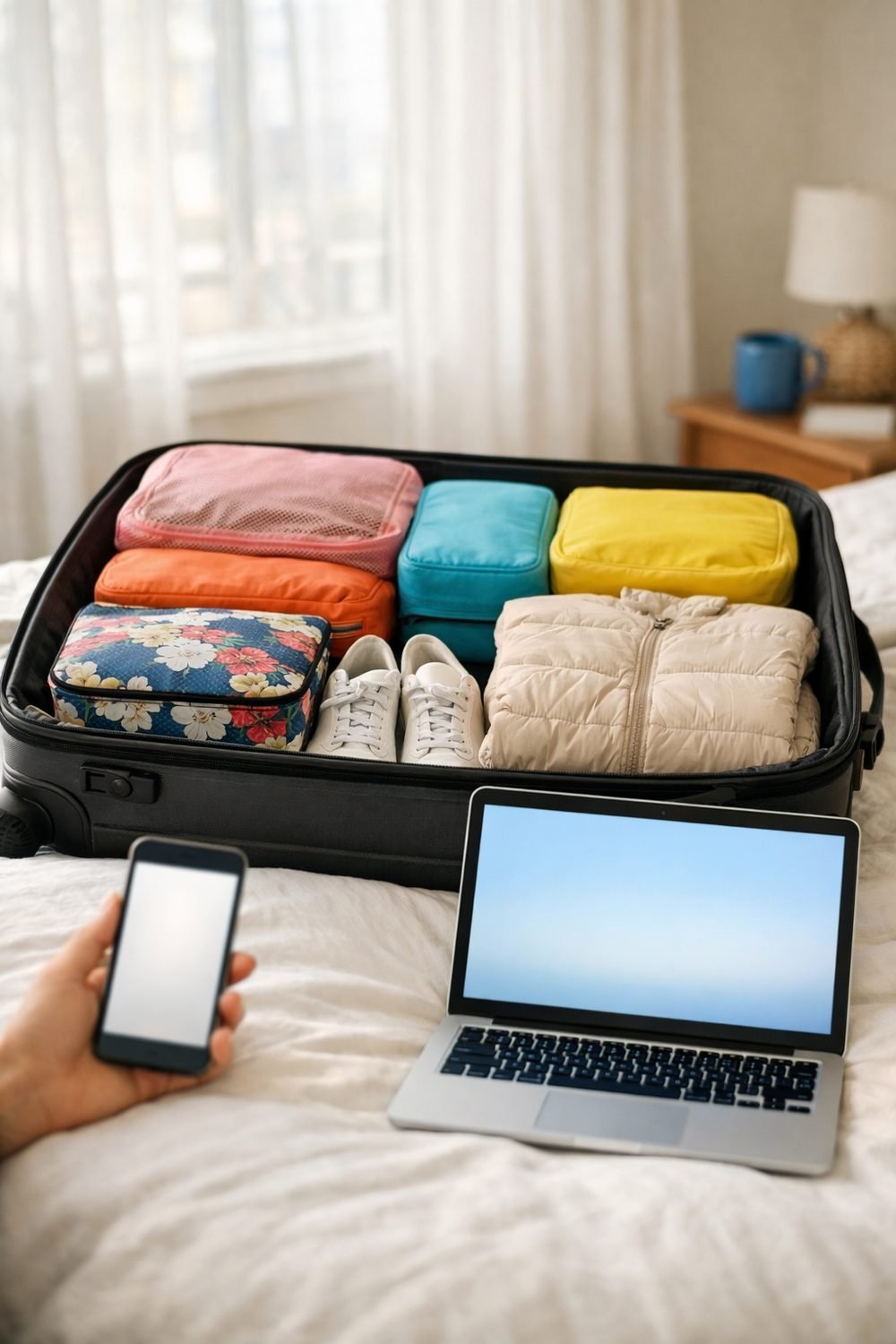
The best travel products are rarely the ones sold on a feeling, but most of them are marketed that way. You picture yourself gliding through an airport with the perfect bag, the perfect pillow, the perfect little organizer for your cords. Then you get home, and half of it, even a neck pillow like the Cabeau Evolution Pillow, sits in a drawer.
This is an easy mistake to make. A fancy collapsible water bottle that leaks on the first day will likely end up forgotten in a closet. The lesson is simple: a travel product is only worth buying if it solves a real problem you actually have. This guide walks you through how to figure that out before you spend anything.
Short on time? Our top picks: Peak Design Travel Backpack, Away Carry-On, Eagle Creek Pack-It Cubes and Bellroy Travel Wallet. See all picks
What You Need Before You Shop for Travel Products
You don't need much for this. Grab these before you start shopping:
- A notes app or a scrap of paper
- A rough idea of your next trip or two (where, how long, how you're getting there)
- Your current bag, if you plan to pack the item in it
- The product listing you're thinking about, open in another tab
- About 15 minutes of honest thinking
That last one matters more than it sounds. Most bad buys happen fast, late at night, with a sale timer ticking.
Step 1: Name the Exact Problem
Start by writing down the problem in one sentence. Not "I want to be more organized." That's too fuzzy. Try something like "My chargers get tangled at the bottom of my backpack and I waste time digging for them."
Once you have a clear sentence, it's much easier to judge a product. Does this cord pouch fix the tangle problem? Yes or no. A vague goal lets almost anything sound helpful, which is exactly how a drawer fills up.
Think back to your last trip. What annoyed you? Where did you lose time, get uncomfortable, or wish you'd packed differently? Those moments are your real list. Your list may be short too, such as cold feet on overnight flights, or never being able to find your passport fast at check-in.
Tip: If you can't name the problem in one sentence, you probably don't need the product yet. Wait until a trip shows you the gap.
Step 2: Be Honest About How Often You'll Use It
This is the step I skipped for years. A product you'll use on every trip is a very different buy from something you'll need once.
Ask yourself: how many trips a year do I take? Will this come with me on all of them, or just the beach one in July? A good packing cube, like the Eagle Creek Pack-It Cubes, might go on every single trip. A special snorkel mask might go on one.
For the once-in-a-while stuff, consider renting, borrowing, or buying something basic. You don't need the top model of a thing you'll use twice in five years. On the other hand, if you'll use it constantly, it can make sense to pay a little more for something that holds up.
Tip: Divide the price by how many times you'll realistically use it. It's a quick gut check, not a math test, but it changes how a lot of "deals" look.
Step 3: Check the Weight and Size of Any Travel Bag or Gear
Every ounce counts more than you think, especially if you fly with only a carry-on. A product can be great and still be wrong for you if it's bulky.
Look for the weight and dimensions on the listing. If they're not listed, that's a small warning sign. Then compare those numbers to your actual bag. It helps to hold up something from your kitchen that's about the same size, just to picture it. A phone, a paperback, a coffee mug. It sounds silly, but it works.
Also think about where it'll live in your bag. Will it fit in an outside pocket for quick access? Does it squash flat? Does it need its own case?
If you're shopping for a travel backpack carry on or a best travel luggage set, size rules matter even more, since airlines set their own limits and they change. Always check your airline's current carry-on rules on their site before you buy. The Carry-On Luggage Buyer's Guide and Comparison Sheets below this post can help you line up bag sizes and features side by side, so you're not juggling ten browser tabs.
Tip: Weigh your packed bag at home with a simple luggage scale or a bathroom scale. You'll know quickly if a new item is going to push you over.
Step 4: Look for a Simpler or Cheaper Option
Before you buy, ask: is there something I already own that does this? You'd be surprised how often the answer is yes.
A few swaps I've found myself using:
- A zip-top bag instead of special travel toiletry bottles for short trips
- A rolled-up sweater instead of a travel pillow (I'll admit the pillow wins on long flights, though)
- A hair tie or rubber band instead of fancy cord wraps
- A regular scarf that doubles as a blanket on cold planes
Some travel gadgets are overrated, in my opinion. Many "all-in-one" tools try to do six jobs and do none of them well. It's usually better to carry one simple thing that does one job right.
That said, sometimes the cheap option really isn't good enough. A flimsy luggage lock or a weak phone charger can let you down when you need it most. Cheaper is a good place to start looking, not a rule.
Tip: Try the free version first. Pack your old stuff on one trip and note what actually failed. Then you'll know what's worth upgrading.
If you want a quick way to get your next trip started on the right foot, our free Vacation Countdown Checklist and 1-Day Itinerary Page is yours when you join the email list.
Step 5: Read Reviews for Durability, Not Just Stars, Before You Buy a Travel Bag Set
Star ratings are a starting point, but they don't tell you much on their own. What you really want to know is how the product holds up after a few trips.
Here's how I read reviews:
- Skip the five-star "Just got it, looks great!" reviews. They haven't used it yet.
- Look for reviews that mention time, like "after three trips" or "six months in."
- Read the two- and three-star reviews closely. They're often the most honest.
- Watch for the same complaint showing up again and again. One broken zipper is bad luck. Twenty broken zippers is a pattern.
- Check photos from buyers, not just the seller's photos, whether you're browsing a travel store or a big online shop.
Pay attention to the weak spots that usually fail first: zippers, wheels, handles, seams, and straps. If people keep mentioning one of those, take it seriously.
Tip: Search the reviews for words like "broke," "ripped," or "stopped working." It's a fast way to find the real problems.
Step 6: Check the Return Policy Before You Pay
This one takes two minutes and can save you a real headache. Find the return or refund terms on the seller's page and read them before you check out.
Things to look for:
- How many days you have to return it
- Whether you have to pay return shipping
- If the item has to be unused or in its original box
- Whether there's a warranty, and what it actually covers
Timing matters here. If your trip is six weeks away and the return window is 30 days, you might not get to test the item on a real trip before the window closes. In that case, try it at home right away. Pack it, carry it around the house, roll it down the driveway. Do whatever you can to spot problems early.
Tip: Keep the box and receipt until after your first trip. Throwing out packaging too soon can lead to regret.
Step 7: Plan Where Your New Travel Products Fit in Your Packing
Even a great product can get forgotten if it doesn't have a spot in your routine. Before you buy, picture the item in your packing list. Will you remember to bring it? Will you know where it is when you need it?
Keep a running packing list for each type of trip: weekend drive, work trip, long flight. When I buy something new, I add it to the right list right away. That way it actually comes along instead of sitting by the front door. The Trip Planner and Packing Checklist Bundle below this post is one way to keep those lists in one place, if paper or printables work better for you than an app.
Tip: If you can't figure out where something goes in your bag or your list, that's a hint it might not earn its spot.
Troubleshooting
"I bought it and I never use it."
It happens to everyone. Check if it's still in the return window. If not, ask yourself if it solves a problem on a different kind of trip. If it doesn't, pass it on to a friend who travels more than you do. No guilt needed.
"The reviews are all over the place."
Mixed reviews usually mean the product works well for some people and not others. Look at who's happy and who isn't. A laptop bag for travel might be great for short people and awful for tall ones. Find reviewers who travel the way you do.
"It's heavier than I expected."
Listings sometimes give the weight without the case, strap, or charger. If it's too heavy for your bag, return it while you can, or save it for road trips where weight matters less.
"I can't decide between two options."
Go back to Step 1 and reread your problem sentence. Pick the one that fixes that exact problem with the fewest extras. If they're truly tied, pick the one with the better return policy.
Travel Products Worth a Look
These are well-known options that tend to come up for the problems covered in this guide. Match each one to your own problem sentence before you buy.
Peak Design Travel Backpack
Suits people who want one bag for carry-on trips and like organized, accessible compartments. Check the size against your airline's current carry-on limits before you order.
Away Carry-On
A good fit for travelers who want a hard-shell rolling suitcase from a brand with a wide range of sizes. Check the weight of the empty case, since that eats into your allowance.
Eagle Creek Pack-It Cubes
Suits anyone who wants to separate clothes by day or type inside a suitcase or backpack. Check that the cube sizes actually fit the shape of your bag.
Bellroy Travel Wallet
Helpful if your problem is finding your passport and cards quickly at check-in. Check that it holds the passport size and number of cards you carry.
Anker Portable Charger
Works for people who rely on a phone for maps, tickets and photos all day. Check the capacity and the ports against your devices, and confirm airline rules for power banks.
Cabeau Evolution Pillow
Suits overnight and long-haul flyers who want neck support and don't mind the bulk. Check how it packs down, since a pillow that won't fit your bag tends to get left behind.
Tile Bluetooth Tracker
Useful if you worry about checked bags or losing small items on the road. Check that it works with your phone type and read how its range and network work.
Check current plans and prices on each brand's own site before you decide.
FAQ
Should I buy a travel adapter or other gear right before a trip?
It's best to avoid it if you can. Buying at least a few weeks early gives you time to test the item and return it if it's not right. Last-minute buys often mean you're stuck with whatever shows up.
Are expensive travel products always better?
Not always. A higher price can mean better materials, but sometimes you're paying for a brand name or extra features you won't use. Read reviews about durability and compare what you actually get.
How many new travel products should I buy at once?
Fewer than you think. Try one or two new things per trip so you can tell what actually helped. If you change everything at once, it's hard to know what's worth keeping.
What's the most common mistake people make?
Buying for an imagined trip instead of a real one. It's easy to shop for the person you hope to be on vacation. Shop for how you actually travel, and you'll waste a lot less money.
Here's your next step: grab the free Vacation Countdown Checklist and 1-Day Itinerary Page by joining the email list, and use it to jot down your problem sentences before your next trip. Then, if you're shopping for luggage or want your packing lists in one spot, take a look at the guides below this post. Start small, buy what solves a real problem, and let your next trip tell you what's missing.
Printables and tools that can help
Carry-On Luggage Buyer's Guide and Comparison Sheets
A printable guide and comparison sheets to write down what matters to you before you look at any seller...
See detailsTrip Planner and Packing Checklist Bundle
A printable bundle with a 30-day goal page, weekly planner and checklists for frequent travelers and...
See details