Best Compression Packing Cubes: A Plain-English Guide
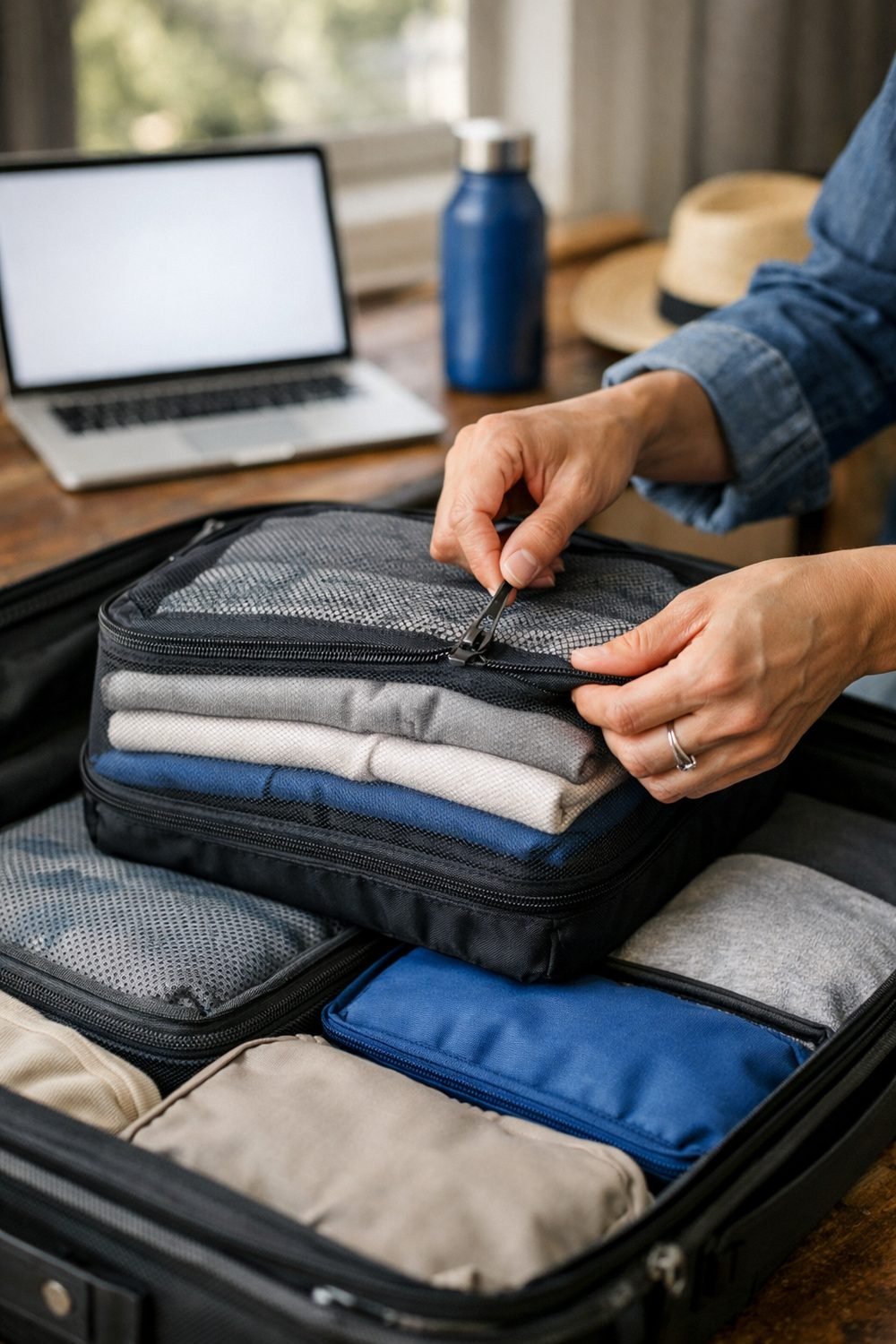
Many people assume packing cubes are one of those things travel fans buy just so they have something to talk about. Then I did a week-long trip with just a carry-on, a pile of sweaters, and one compression cube my sister lent me. By day three I'd stopped digging through my bag like a raccoon in a trash can. You can find your socks without digging. You can zip the bag shut without sitting on it.
The best compression packing cubes are a simple way to save space and keep things tidy. They're fabric boxes with a second zipper that squeezes the cube flatter once it's full. That's the whole trick. But not all of them are worth your money, and a few of the features people rave about don't matter much.
This guide walks through what I look at before buying a set: size, the compression zipper, material, sets versus singles, mesh panels, and the return policy. This guide also covers a practical way to pack them and common early mistakes, so you can skip them.
Short on time? Our top picks: Eagle Creek Pack-It Compression Cubes, Gonex Compression Packing Cubes, Bagail Compression Packing Cubes and Samsonite Packing Organizers. See all picks
Quick summary
- Measure your bag first. Cubes should fit the inside of your luggage, not just look nice on the shelf.
- The compression zipper is the main thing you're paying for. Check that it runs all the way around and feels smooth.
- Lighter fabric is fine for most trips, but very thin fabric can tear at the seams when you squeeze hard.
- Sets with mixed sizes are usually more useful than three identical cubes.
- Mesh tops help you see what's inside, but they're a nice extra, not a dealbreaker.
- Read the return terms before you buy, because you won't know if they fit your bag until you try.
- Compression saves space, not weight. A packed bag can still go over an airline's weight limit.
What compression cubes actually do (and don't do)
A regular packing cube is a zippered fabric box. You fill it, zip it, done. A compression cube adds a second zipper, usually running around the middle or the edge. Once the main zipper is closed, you close the second one, and it pulls the top and bottom closer together. The cube gets thinner.
How much thinner depends on what's inside. Soft, squishy clothes like fleece, sweaters, and hoodies shrink a lot. T-shirts shrink some. Jeans barely change because there's not much air in denim to push out.
The honest limits
Here's the part people sometimes skip: compression cubes don't make your clothes weigh less. If you cram more into your bag because you suddenly have room, your bag gets heavier. On one trip I fit in two extra sweaters "just in case" and then had to haul a much heavier carry-on through two train stations. It's easy to end up not wearing a sweater you packed.
They also won't flatten things the way vacuum bags do. Vacuum bags squeeze out almost all the air, but they're fussy to use on the road unless you bring the roll-to-seal kind. Compression cubes are a middle ground. Less dramatic, much easier.
Size: match your luggage packing cubes to your bag
This sounds obvious, and I still got it wrong the first time. A common mistake is buying a set that looks great but includes a large cube that's a little too long for a standard carry-on, so check the dimensions first. It fit only if I bent it, which kind of defeats the point.
How I measure
Open your empty bag and measure the inside, not the outside. Wheels, handles, and the frame eat up space, so the inside is always smaller than the listed size. Write down the length, width, and depth. Then compare those numbers to the cube sizes on the seller's page.
Keep in mind that cubes are a bit flexible when empty but get firmer once they're full. A cube that's an inch too long for your bag will be annoying every single time you pack.
Carry-on versus checked bag
For a carry-on, I like one large cube or two mediums along the bottom, with a small one for underwear and socks. For a big checked suitcase, you have more room to play, so a set with two larges makes sense.
Packing cubes for backpack travel, such as those from Osprey, are their own thing. Their shape is often taller and narrower than a suitcase, so long, slim cubes tend to fit better than wide, flat ones. If you travel with a backpack, look for cube sizes that match its shape rather than a "standard" set.
If you're still choosing the bag itself, the Carry-On Luggage Buyer's Guide and Comparison Sheets below this post might help. It's easier to pick cubes once you know which bag they're going in.
The compression zipper is where quality shows
If I could only check one thing in a store, it would be this zipper. It's the part doing the hard work, and it takes the most strain. A cheap main zipper is annoying. A cheap compression zipper that splits halfway through a trip is a real problem.
What to look and feel for
- The compression zipper should run all the way around the cube, or close to it. Short ones don't squeeze evenly.
- It should pull smoothly on an empty cube. If it catches when there's nothing inside, it'll fight you when it's full.
- Check the zipper pulls. Bigger pulls or little loops are easier to grip when you're tugging hard.
- Look at the stitching where the zipper meets the fabric. Loose or uneven stitches there tend to give out first.
Some sellers name the zipper brand they use. That can be a helpful clue, but I wouldn't buy or skip a set on that alone. Cubes with no-name zippers can last for years, and "premium" ones sometimes fail, according to reviews. Reading reviews that mention the zipper specifically tells you more than a brand name does.
A tip that saved my zipper
Don't force it. If the compression zipper won't close, take a shirt out. That's not what you want to hear the night before a flight. But yanking on a zipper that's under too much pressure is the fastest way to break it. Overstuffing can wreck a cube, leaving it good only as a sad shoe bag.
Material: light is good, too thin is not
Most compression packing cubes for travel are made from nylon or polyester. Both are light and dry fast. You'll see words like "ripstop" on some, which means the fabric has a woven grid that helps stop small tears from spreading.
Weight versus toughness
Ultralight cubes are lovely to hold. They weigh almost nothing and fold down tiny. But the very thinnest ones can feel crinkly, and they don't always handle hard squeezing well over time. Thicker fabric adds a little weight and holds its shape better.
Unless you're counting every gram for a backpacking trip, a middle-weight fabric is the sweet spot. You won't notice the difference on your shoulder, and the cubes will likely hold up better.
Water resistance
Some cubes say they're water-resistant. That usually means a light coating that helps with a spill or a damp beach towel next to them. It doesn't mean waterproof. Don't count on any cube to keep clothes dry in heavy rain or a soaked bag. If water matters for your trip, check exactly what the seller claims and how they describe it.
Sets versus singles
Most compression packing bags and cubes are sold in sets. That's often the better deal, but only if the sizes in the set actually work for you.
What a useful set of large packing cubes and smaller ones looks like
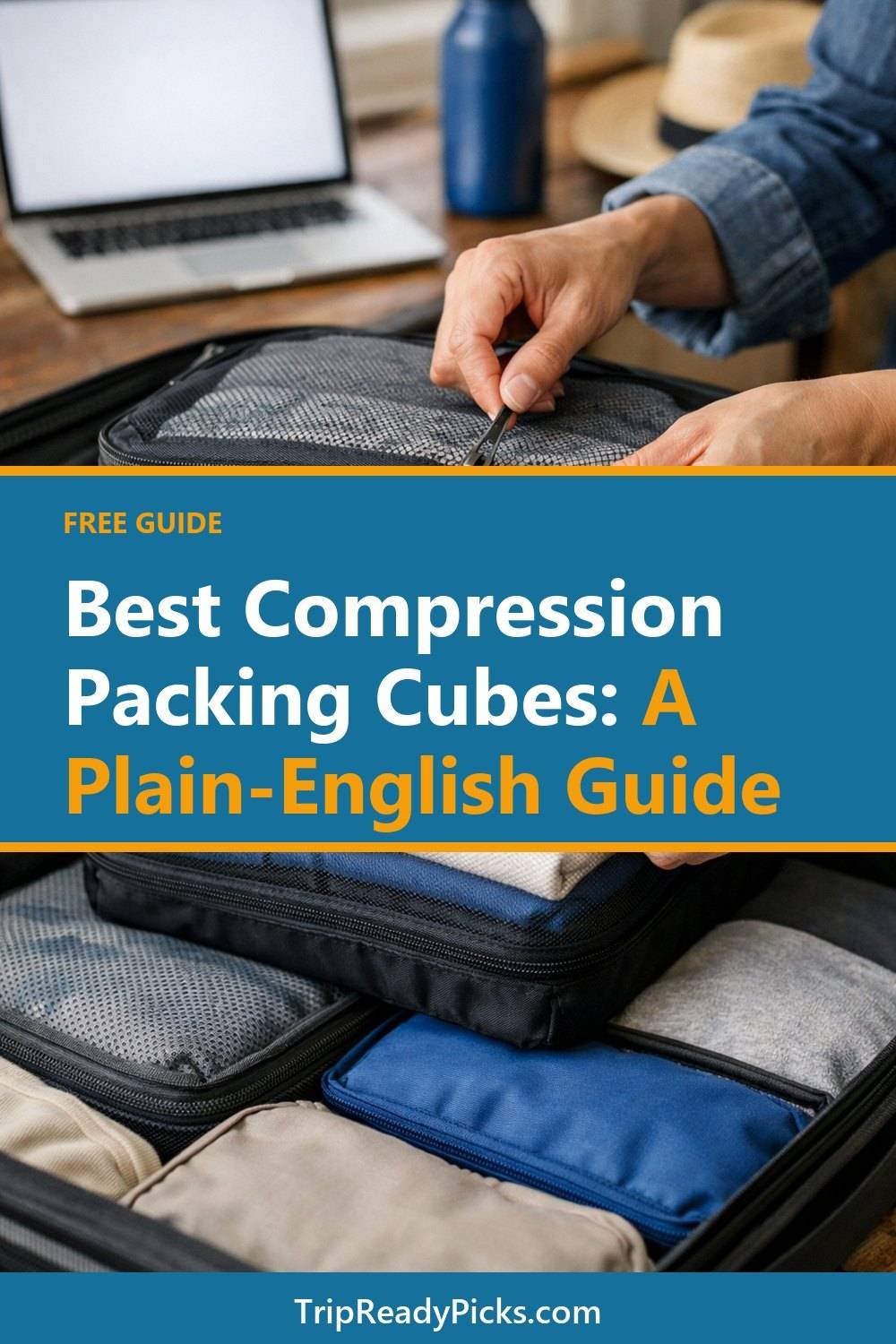
A set with several sizes works well: something like one large, one or two mediums, and a small. The large holds bulky stuff. The mediums hold shirts and pants. The small handles underwear, socks, or swimwear.
Sets with five or six pieces, like many from Gonex, sound generous, but look closely. Sometimes the "extras" are tiny pouches or a laundry bag you may never use. A laundry bag is a fine option, honestly. But don't let piece count talk you into a set where the main cubes are the wrong size.
When buying singles makes sense
If you already own regular packing cubes, you might only need one or two compression ones for your bulkiest clothes. That's what I do now. Regular cubes for shirts and small things, a compression cube for sweaters and a puffy jacket. Mixing types works fine, and it saves you from buying a whole set you'll half use.
A quick comparison
Full matching set: Good if you're starting from zero and want everything to match and stack neatly. Easier to pack because the sizes are designed to go together.
One or two singles: Good if you already have some organizers, or you mostly pack light clothes and only need help with a few bulky items.
Mixed brands: Works, but sizes may not line up nicely in your bag. You might end up with odd gaps.
Mesh panels: handy, but not a big deal
Many cubes have a mesh top so you can peek inside without unzipping. It's nice. When I'm half-awake in a hotel room at 6 a.m., being able to see which cube has my running clothes really does help.
Still, I think mesh is a little overrated. After a day or two you'll remember what's where anyway. And mesh is a bit less tough than solid fabric, so it can snag on things like a watch buckle or a zipper.
Other ways to tell cubes apart
If you skip mesh, different colors do the same job. Blue for tops, gray for bottoms, whatever. Some cubes have a little label window or a spot to write on. Even a small strip of tape with a word on it works. One handy idea is to use a single cube in a loud color just for "stuff I need first when I arrive."
Quick side note: if you like that kind of "first things first" planning, the free Vacation Countdown Checklist and 1-Day Itinerary Page you get for joining our email list pairs well with it.
How I actually pack compression cubes
Owning good cubes is half of it. Packing them well is the other half. Here's my routine for a carry-on week.
- Lay everything out on the bed. Then put back about a quarter of it. I know. Do it anyway.
- Roll or fold, then fill the cube flat. I roll T-shirts and fold sweaters. Either way, fill the cube evenly so it doesn't bulge on one side.
- Close the main zipper first. Gently press the cube down with one hand while you zip.
- Then close the compression zipper. Go slowly. Press as you go. If it's fighting you, remove something.
- Stand the cubes on their sides in the bag. Like books on a shelf. You can see and grab each one easily.
- Fill gaps with small stuff. Socks, a charger, a rolled belt.
Example: a cold-weather weekend
For a three-day trip somewhere chilly, I'd put two sweaters and a fleece in one large compression cube. Leggings, a pair of pants, and a couple of long-sleeve shirts go in a medium. Underwear, socks, and a hat go in the small one. Wear your bulkiest jacket and boots on the plane. The bag zips easily, and I'm not wrestling with it at the gate.
Example: a beach week
Beach clothes are thin, so compression matters less here. You can still use one compression cube for a cover-up, a light hoodie, and a few dresses or shorts. Swimwear goes in a small cube, ideally one I don't mind getting a little damp. Honestly, for a beach trip, regular cubes would do almost as well.
If you like having a set plan before you pack, the Trip Planner and Packing Checklist Bundle below this post has the lists I'd use for something like this.
Return terms: check before you click buy
This is the boring part, and I almost skipped it the first time. Then my cubes didn't fit my bag, and I was really glad I'd checked.
You won't truly know if a set works until you put it in your own luggage and fill it. So before buying, look at the seller's return policy. A few things I check:
- How many days you have to return them.
- Whether you can return them if you've opened the packaging or tried them with clothes.
- Who pays for return shipping.
- What the warranty covers, if there is one, especially for zippers.
Policies vary a lot, and they change, so go by what the seller's page says at the time you buy. It's best to test new cubes at home as soon as they arrive, not the night before the trip. That way, if something's off, I still have time to send them back.
Common mistakes
These mistakes are common, so no judgment here.
Overstuffing because you can
The extra space is tempting. But a stuffed cube puts stress on the zipper and makes your bag heavy. Leave a little give.
Forgetting about weight limits
Compression saves space, not weight. Airlines often have weight limits on bags, sometimes even on carry-ons. Check your airline's rules before you fly, and weigh your bag at home if you can.
Compressing things that wrinkle easily
Squeezing a linen shirt or a dress shirt hard is a recipe for creases. Keep those in a regular cube or folded flat on top, and save compression for knits and fleece.
Buying cute packing cubes for looks instead of fit
Pretty colors are fun. A cube that doesn't fit your bag is not fun, no matter what color it is.
Packing damp clothes
Sealing wet swimwear or a sweaty shirt in a tight cube for a few days can leave it smelling musty. If something's damp, keep it in a separate bag and let it air out when you can.
Testing them the night before
Try the cubes at home well before your trip. You'll learn how much each one holds and whether the zippers behave.
Compression packing cubes worth a look
These are well-known brands that make compression cubes or close cousins of them. Use them as a starting point, then match the sizes to your own bag.
Eagle Creek Pack-It Compression Cubes
Eagle Creek is one of the best-known names in packing organizers and offers compression cube lines. It suits people who want a established brand with several size options. Check the fabric weight and the zipper layout on the exact line you pick, since their lineups vary.
Gonex Compression Packing Cubes
Gonex sells compression cube sets that are popular with first-time buyers. It suits people who want a multi-piece set to try the idea. Check that the sizes in the set match your luggage, and read reviews that mention the zippers.
Bagail Compression Packing Cubes
Bagail makes sets of cubes in mixed sizes, many with mesh tops. It suits travelers who like to see inside without unzipping. Look closely at what the extra pieces in a set actually are before counting them as value.
Samsonite Packing Organizers
Samsonite is a major luggage maker that also sells packing organizers. It suits anyone who wants cubes from the same brand as their suitcase. Check the cube dimensions against your bag's inside measurements, not just the outside.
Away Insider Packing Cubes
Away sells packing cubes designed to pair with its own luggage. It suits people who already own or plan to buy an Away bag. Check whether the cubes you want include a compression feature, as not every style does.
Peak Design Packing Cubes
Peak Design makes packing cubes aimed at people who care about shape and durability. It suits travelers with a backpack or camera bag setup. Check the available sizes and whether you need a true compression zipper or just a structured cube.
Osprey Ultralight Packing Cubes
Osprey is a trusted outdoor brand with packing cubes made for backpack travel. It suits hikers and carry-on-only travelers who want light fabric. Check how thin the fabric is if you plan to squeeze hard, and confirm the cube shape fits your pack.
Check current plans, options and prices on each brand's own site before you buy.
FAQ
Are compression cubes for travel worth it over regular packing cubes?
If you pack bulky clothes like sweaters or fleece, they can make a real difference in space. If you mostly pack thin summer clothes, regular cubes may be all you need. Many people, me included, use a mix of both.
Do compression cubes wrinkle clothes?
They can, especially with fabrics like linen or crisp cotton. Rolling clothes and not over-squeezing helps a lot. For anything that really needs to stay smooth, I'd skip compression and fold it flat instead.
How do I clean packing cubes?
Follow the care instructions on the tag or the seller's page, since materials differ. Many people hand-wash them with mild soap and let them air dry. If a cube just looks dusty, a quick wipe and some time in fresh air is often enough.
Can I use compression packing cubes in a backpack?
Yes, and they work nicely in one. Just pick sizes that match the backpack's shape, which is often taller and narrower than a suitcase. Long, slim cubes usually fit better than wide ones.
If you're getting ready for a trip, start by grabbing the free Vacation Countdown Checklist and 1-Day Itinerary Page from the sign-up box. It's a simple way to get your planning out of your head and onto paper. Then, once you know which bag you're bringing and what's going in it, take a look at the Carry-On Luggage Buyer's Guide and Comparison Sheets and the Trip Planner and Packing Checklist Bundle below this post. Measure your bag, pick cubes that fit, and give yourself a calmer packing night.
Printables and tools that can help
Carry-On Luggage Buyer's Guide and Comparison Sheets
A printable guide and comparison sheets to write down what matters to you before you look at any seller...
See detailsTrip Planner and Packing Checklist Bundle
A printable bundle with a 30-day goal page, weekly planner and checklists for frequent travelers and...
See details